Monday, May 3, 2010

REVIEW: AU REVOIR TAIPEI

Arvin Chen's Au Revoir Taipei just opened up the Los Angeles Asian Pacific Film Festival (after having been the closing film for the SFIAAFF)[1]. It's part of what I think is a fascinating trend of Asian American directors traveling overseas to Asia to make films. This is a theme I touched on in an essay for the 2008 ACV fest catalog which was also mirrored in my interview with Wayne Wang from the same catalog. Also, my colleagues over at Asia Pacific Arts have a fantastic conversation on the very same topic, pegged to Arvin's film.

I have to admit; this film had gotten such rave reviews from its SFIAAFF appearance that I went in with slightly inflated expectations and I didn't think its execution quite lived up. In terms of what I liked: ambitious script that was, overall, well-executed. As a friend stated it well - there's a lot going on in the film between its romantic elements and the crime caper that's mixed in yet Chen makes it all seem kind of effortlessly integrated. That's not for nothing, especially given how hacked together other film fest flicks can feel. Chen has a particular aesthetic mode that I thought was well-conveyed here, especially as someone who has spent time in Taipei and could appreciate the unique kind of urban spaces and lighting that accompanies Taipei after dark. I liked the two main leads as well but the supporting cast are really where the movie gels best so props for the acting and casting.

My two disappointments: 1) The caper plot was being set-up very early in the film and unfolded in predictable fashion. There was almost no narrative tension because you already knew what was going to happen before it happened. That's not to say there wasn't genuine enjoyment in watching it unfold but that's more about the strengths of the script and acting than the actual storytelling. 2) This isn't unique to this film at all but the two leads are imbalanced. On the one hand, you have a female lead who is completely endearing to the audience and you can easily understand why he-would-be-into-her. The other way? Makes no sense at all. The male lead is awkward, indecisive, not terribly social (at first at least) and basically lacks her liveliness and decisiveness. In what universe would she be interested in a guy like that? (Probably the same universe that says Diane Keaton would ever be into Woody Allen or Catherine Keener in Steve Carrell). I kept thinking, "this makes no sense; she could do a lot better" and that's not a good reaction to have when watching a romantic comedy. I don't think it was a shortcoming in the acting; it was just a poorly conceived character who needed to be given more to do than just mope and mutter. (He can make good noodles so I guess that's a plus).

This all said though, I was really pleasantly surprised by the film and my only hope is that this wave of Asian Am directors creating all this interesting and well-executed films overseas will be able to find a way to translate that success back in the States because frankly, the overall quality of Asian American film (shot in America) continues to suffer through the current doldrums of the indie film industry. The kind of creativity and execution now being seen abroad would be most welcome back home too.


[1] Disclosure: As a reminder, I should note that I was on the LAAPFF screening committee this year.

Labels: review

--O.W.

<< Home

Saturday, May 1, 2010

REVIEW: DIRTY HANDS: THE ART AND CRIMES OF DAVID CHOE

I first saw Dirty Hands about a year ago, when I wrote it up for the 2009 SFIAAFF catalog. It has since gotten a small, platform release, beginning this weekend.

Choe first hit my radar via a friend of mine who also grew up around Choe and his work in the South Bay. I then followed his exploits, now and then, via Giant Robot Magazine and the internet; it's safe to say that Choe has a substantial cult following that's only grown through the years. Dirty Hands does, in my opinion, a strong job of tracing that growth and evolution of that career, including its attendant difficulties and challenges. All this is made possible by filmmaker Harry Kim who purportedly assembled the footage for this documentary from eight years of following Kim around, documenting both his professional and personal life.

That perspective is both the doc's strength and weakness. In reference to the latter, the film lacks what a critical distance; it can feel too hagiographic in some moments, downright intrusive in others. Yet, it's that intimacy which also makes the film fascinating. There is, for example, way too much time devoted to Choe's personal life. It's never explained why the viewer should really care about Choe's relationship problems and these parts of the doc drag early and often. At the same time, these scenes also puncture the veil of "the artist" and allow us to see Choe in moments which can be uncomfortable, even offensive, yet rarely fail to fascinate when taken as a whole. This is an imperfect documentary of an imperfect man and in that sense, they seem perfectly fit for one another.

Labels: review

--O.W.

<< Home

Saturday, October 3, 2009

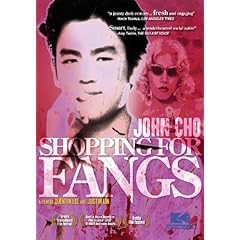
REVIEW: SHOPPING FOR FANGS

Buy | Rent (Updated version is for purchase only right now)

There's a new, updated version of Shopping for Fangs (SFF) coming out next week, with DVD commentary. That's partially prompts a review that should have appeared about 11 years ago...

I first saw Shopping for Fangs when it was part of the "Class of '97" quartet which debuted at the SFIAAFF in 1997. It was the debut feature for both Quentin Lee (Ethan Mao, The People I've Slept With) and Justin Lin (Fast and Furious, Finishing the Game).

It was also, of the four Class of '97 films, the most deliberately off-beat, with the two main characters dealing with lycanthropy and amnesia (respectively), interspersed with Mexican stand-offs, bible study jokes, touch football, Ranch 99 shopping malls and some good wigs. It also stars a young John Cho in his first major role, playing a lovelorn 20-something who spends a lot of quality time in a Taiwanese cafe. (You'll also spot Lela Lee, aka "Angry Little Girl" playing the sister of Radmar Jao's character, Phil).

If I have one, outstanding impression of SFF, it's how it takes one of the most common of Asian American film themes - identity - and cleverly riffs on it but without ever coming back to hang-wringing about race/ethnicity. Indeed, there's very little "sociological content" in SFF which, especially in 1997, was fairly striking (Sunsets was another example of this). Especially given Justin Lin's later films, in particular Better Luck Tomorrow, you could already see the ways in which he and Quentin really set out to make a very different kind of AA narrative, one that deliberately stepped around the traditions of the past. Parents don't exist. With one key exception, family/immigrant history doesn't exist. Instead, as convoluted as the dual plots were (and I don't mean that in a critical way; the storylines were meant to be deliberately outrageous) SFF was intensely character driven.

By way of summation, there's basically three parallel storylines: Phil, who thinks he might be turning into a werewolf; Katherine, who is having amnesiac blackouts and is married to an emotionally crippled a--hole; Clarance, who is getting over a broken heart and has befriended the enigmatic, Brigette Lin-inspired Trinh. There are bits of interweaving that happens, some small, and the major one is with Trinh, who ends up crossing into Katherine's life when she discovers her purse and phone. (The film is very post-Pulp Fiction though still linear).

All three plots are driven by journeys of discovery but each is fraught with danger. Phil wants to be more assertive (and masculine) but he fears that as a possible lycanthrope, he may be unleashing too much of his inner desire. Katherine is trying to figure out what's happening during her blackouts and why she's being contacted by Trinh.. Clarence wants to quit moping and open his heart again but he's worried about being hurt again.

In trying to think of how to properly this film formally, the two thoughts that keep coming to mind are that, 1) it's laudably ambitious but 2) the sum is less than its parts. The latter is hardly something unique in cinema - one could say that most films that aren't perfect are less than the sum of their parts, but in my mind, SFF just has a lot of parts going on that don't quite gel in the way they aspire to. Having just caught the last half of the film at the ID Film Festival this past weekend, what really resonated was that this was a good, smart script in terms of all it was trying to do but where it ends up more listless is in the execution.

To be sure, some parts are done great (Phil's interest in a co-worker who turns out to be a Bible thumper is deliciously, painfully funny), some of it so-so (much as I'm a fan of John Cho, as Clarence, there just isn't much to invest in), some of it rather flat (Katherine's storyline is woefully underdeveloped, especially her marital relationship). You get where the film wants to take you, especially once you get to the end and its big twist, but the ride's choppy along the way.


I used to screen this film semi-regularly for my students at Cal and they tended to have mixed reactions to it; it was an interesting way to get them to start talking about contemporary AA cinema but I don't think it went over as well as, say, Eat a Bowl of Tea and these days, I'd probably be inclined to show them Better Luck Tomorrow instead. That said, I still think the film is incredibly important for helping mark a particular moment in AA film where you start to see hints of the future already on their way.

BTW, Quentin and Justin both talk about the film for Justin's special "Class of 1997" revisit post on youoffendmeyouoffendmyfamily.com.

Labels: Justin Lin, review

--O.W.

<< Home

Sunday, August 23, 2009

REVIEW: TERMINAL USA

Buy | Rent

This had been one of the Holy Grail of Asian American movies in terms of how difficult it was to come by a copy; now, finally, it's on DVD.

I first saw this when I was a TA for an Asian American film class taught by Alvin Lu and he screened this as one of the first films 1) because it's a great film and 2) it scares off students. Seriously, I think our enrollment fell by 20% after screening this because it's bizarre and gory but also, in my opinion, completely brilliant.

Moritsugu, along with Gregg Araki, made a reputation for themselves in the early 1990s as "bad boy" filmmakers working in a post-punk tradition. Both were also subject to some criticism within the Asian American community because, though they were AA, their early films had no AA cast or themes. Moritsugu, whether influenced by that criticism or not, fired off Terminal U.S.A, the most bitingly funny and over-the-top satires of Asian American family melodramas created - and keep in mind, this film came out before the wave of family melodramas began to crest with Joy Luck Club and it has (unfortunately) gone relatively unabated through present.

The film is big on theatrics, gore, and generally bizarreness as we watch a nuclear Japanese American family (starring Moritsugu himself) implode in the most outrageous ways. including, in no particular order, IV drug use, bathroom blow jobs, gay sex phone lines, drugs, guns, and the most improper use of a hobby horse, ever. I can't even sum it up properly.

One of these days, I'll get around to writing a more proper review but seriously, you need to see this. (Unbelievably, the film was originally produced by and screened on PBS.)

Labels: features, review

--O.W.

<< Home

Sunday, March 1, 2009

REVIEW: BABY (2009)

Buy | Rent

I first saw this at the 2007 SFIAAFF and I was really struck by it at the time. The gangster genre is, of course, nothing new to Asian cinema but I couldn't recall an Asian American film that managed to pull one off very well. My first impression of Baby was that Juwan Chung had delivered a stylistically compelling and intriguing film about a young Asian American gang banger growing up in Southern California.

I think one of the most interesting things about Baby is how the Asian American gang he's involved in seems inherently pan-Asian but this is never something that becomes central plot-wise; the fact that the gang is made up of different Asian ethnicities is made to seem perfectly natural. Whether this is realistic or not, I can't say but it seem like a detail that was meaningful, especially for a film set in the polyglot that is L.A.

As a first-time feature director, Chung has some good instincts around filming drama. This film depends quite a deal on suspense and tension and Chung creates the atmosphere he's looking for in most scenes. He's also got decent chops in the action arena too; there's a shoot-out towards the end that has the kinetic force of a Cowboy Bebop episode (and I could have sworn borrowed from one).

However, I think one of the most notable shortcomings of the film has been how derivative its plotlines are from other films in the gangster canon. To compare it to the Asian Boyz N The Hood is fairly accurate - there's a lot in Baby that will make you feel as if you've seen it before and you probably have. Provided, as a genre film, it depends on certain conventions, but on more than several occasions, I wish Baby could have transcended some of the more obvious cliches.

This is especially relevant in terms of the main romantic female lead (Sammy), who is one of the least developed characters in the whole film and basically feels like a prop piece. In a film already so heavy with testosterone, you just wish the sole female character wasn't so marginal. As she's envisioned, Sammy contributes very little to the film as a whole and that's a shame.

Overall, I think Baby is worth seeing (and it's in select theaters right now) but to me, it's another triumph of style and technique over the basics of storytelling and character. This is one of my never-ending rants but I feel that as technological access has made professionally production quality more easily achieved, no editing suite or HD camera is going to teach someone the basics of how to tell a story well or cleverly, nor coax better performances out of the actors. Baby is hardly unique in its shortcomings and that's precisely the problem.

Labels: Baby, review

--O.W.

<< Home

Saturday, April 26, 2008

REVIEW: HAROLD AND KUMAR ESCAPE FROM GUANTANAMO BAY (2008)

Buy | Rent

When Harold and Kumar Go To White Castle debuted in 2004, it was a milestone of sorts - a mainstream, gross-out, stoner comedy with two Asian American men cast as leads. Sure, the humor was juvenile and unapologetically male, there was everything from naked breasts to literal bathroom humor, and a dream sequence featuring an anthropomorphalized bag of weed. Do The Right Thing this was not.

But it did represent an achivement of sorts, symbolically to be sure, but also commercially. The movie had enough of a cult following to warrant a sequel (not to mention revitalize Neal Patrick Harris' career, a remarkable feat on its own), thus suggesting that - hey, Asian American leads won't kill your film. I hope the producers of 21 are pondering this.

The film's sequel, Harold and Kumar Escape From Guantanamo Bay is an achievement of a kind too, proof that Asian Americans have made it far enough into the Hollywood machine that they can make perfectly mediocre mainstream fare as much as the next folks. Woo hoo, the promised land!

In all seriousness, it's not like anyone was expecting something approaching genius. I was hoping for "adequately funny," something on the level, at best, of a 40 Year Old Virgin or even Superbad (and yeah, there's a huge difference in the quality of funny between those two flicks).

The laugh-o-meter here was somewhere closer to, oh, Walk Hard, which is to say: not that funny. John Cho and Kal Penn are fun enough to watch at times but there's little new creative soil for either to plow. The funniest single scene was probably when Cho shows up in the library stacks, goth-ed out. It lasted all of a few seconds and he didn't even speak but just the sight of him in masscara was good enough. Penn had fewer moments here than in the previous film - the giant bag of weed returned (anatomically correct no less) but that joke really only works once. And while we're keeping score on this kind of thing: too much Rob Cordury, just a touch too much Neil Patrick Harris, and not enough Chris Meloni. And oh yeah, either too much or not enough pubic shots, depending on your taste.

So, in the end, it was "meh" but the thing is...I didn't feel like, "oh crap, we blew our chance!" And maybe that says something more than the film, on its own, can say...that the fact that an Asian American-lead comedy can be mediocre seems ordinary and harmless rather than a hand-wringing disaster. Of course, it helps that the film also is already in the black after the first weekend, earning a very respectable $14M (the original only made $18M total in theaters). Even if the flick has earned middling reviews, the monetary gains won't hurt Kal Penn or John Cho's future chances and may help open that golden door for other Asian American actors and filmmakers to walk through.

Let me end by throwing this question out: the sexual politics in this film are not particularly glowing - not to anyone's surprise of course - but I wonder how many of the men, so huffy puffy at Falling From Grace are going to raise any issues with this flick? (Yeah, I just went there).

Let me also add: why does it mean when a writing and directing team of all White men can make a more commercially successful franchise lead by Asian American men than most Asian American filmmakers? I'm not asking this rhetorically - I'm seriously curious how this happens.


Labels: Harold and Kumar, review

--O.W.

<< Home

Friday, July 30, 2004

REVIEW: HAROLD AND KUMAR GO TO WHITE CASTLE (2004)

Buy | Rent

Preface: A generation ago, the debate around whether this film qualifies as "Asian American" would probably have been far fiercer but despite the fact that Danny Leiner is White, it's hard to argue that a film starring not one but two Asian American male leads deserves some place in the Asian American pantheon (at least ahead of Come See the Paradise!) This film actually gets better with each new watching even though you its juvenile sexism is just that - but this is a surprisingly subtle and rather subversive take on masculinity and race that isn't politically perfect by any means but certainly is more than "just" a stoner film with two Asian dudes at the helm.

THE REVIEW (originally published on Popmatters.com).

See also: Harold and Kumar website.

Labels: Harold and Kumar, john cho, kal penn, review

--O.W.

<< Home

Thursday, March 18, 2004

REVIEW: EAT A BOWL OF TEA (1989)

Buy | Rent

Preface: Fitting somewhere between a romantic comedy and historical drama, I originally had thought of Eat a Bowl of Tea as being more or less fluff but I later realized it was much more sophisticated and well-executed than I originally gave it credit for. As I mention my original 2003 review of the DVD, it's also been a favorite of my students, not the least of which is because it's one of the rare Asian American films of the pre-'97 era that really dealt with with Asian American sex and romance. Personally, of Wang's Asian American quadrology, it probably isn't as poignant as Dim Sum but in terms of personal enjoyment, it comes in after Chan Is Missing.

THE REVIEW (originally published on Popmatters.com).

Labels: Eat a Bowl of Tea, review, Wayne Wang

--O.W.

<< Home

Tuesday, October 7, 2003

REVIEW: THE DEBUT (2001)

Buy | Rent | Book

Preface: I have great admiration and affection for director Gene Cajayon. More so than even most Asian American films, The Debut was a true labor of love (emphasis on labor) and I know how hard he struggled to bring this film to light. That said, I've also always been candid with some of my critiques of the film. The two most important, in my opinion, are very much interrelated. Firstly, the film is more or less a Filipino take on the familiar family melodrama model that so many Asian American films have followed and while one cannot fault any community their desire to tell their own version of that story, when cast against the wider backdrop of Asian American cinema, the film can feel formulaic without necessarily even meaning too.

Related to that is the "kitchen sink" effect, which means that this film - like many others - feels like it was burdened by the need to represent as much about "the community" as possible and as such, becomes overladen in scenes or other signifiers that, after a while, can feel trite or obligatory.

I think almost all "first" Asian American films for specific communities will inevitably feel this pressure and I don't envy any filmmaker (especially those seeking funding from said communities) having to deal with the many layers of expectations put upon them in trying to balance their vision with a sense of responsibility they may feel to the very people they're hoping to craft these stories for. The hope is that by the time you get to the next project, that pressure has been more or less lifted and you can really start telling the stories you want to tell...uncompromised by a sense of duty or obligation.

THE REVIEW (originally appeared on Popmatters.com).

See also: The Debut website.

Labels: review, The Debut

--O.W.

<< Home

Thursday, May 8, 2003

REVIEW: CHARLOTTE SOMETIMES (2003)

Buy | Rent

Preface: I confess - the first time I watched this film, my initial reaction was, "wtf?" and I was a little annoyed at how Byler deliberately withheld information from the audience that would have made the narrative easier to access. But the next day, I was still haunted by the film and I realized that I had missed the point. As my review indicated, Byler evokes a powerful mood with this film and though the narrative might not be spelled out for the viewer, it succeeds very well in leaving a lasting impression on the viewer. Five years later, I now think of the film as one of the strongest debuts of any Asian American director and it, along with Better Luck Tomorrow, is an intriguing template for the post-'97 Asian American film in terms of new ways of handling the politics of identity.

THE REVIEW (originally appeared on Popmatters.com).

See also: An interview with Eric Byler (originally for Popmmaters.com).

Charlotte Sometimes website.

Labels: Charlotte Sometimes, Eric Byler, review

--O.W.

<< Home

Friday, April 11, 2003

REVIEW: BETTER LUCK TOMORROW (2003) (POPMATTERS.COM)

Buy | Rent

Preface: This was a joint review written by myself and Hua Hsu and really arose out of the year-long conversations that accompanied the fast rise of BLT, the community campaign around it and just the general "moment" it heralded. It's not a conventional review - it's a back-and-forth conversation between Hua and I. For the more conventional review, see my original AsianAvenue.com piece.

THE REVIEW (originally appeared in Popmatters.com).

See also: Better Luck Tomorrow review for AsianAvenue.com.

Labels: BLT, review

--O.W.

<< Home

Saturday, March 1, 2003

REVIEW: BETTER LUCK TOMORROW (2003) (ASIANAVENUE.COM)

Buy | Rent

Preface: This review was originally written for AsianAvenue.com but no longer exists on their site. As you can see with both this and the Popmatters review (see below), there's much more ambivalence about the film now that it actually came out and I think that's a fair bargain. Most of my critiques of the film existed when I first saw it but I was more invested in helping promote its wider release first before pointing out where I felt it fell short.

See also: Better Luck Tomorrow review for Popmatters.com.

THE REVIEW (in full after jump).


Tomorrow Arrives Today

By Oliver Wang

Within Asian American cinema, there’ve been films labeled “important” films, but the label usually hides the fact that they’re not very good. There have been “important” Asian American films that help the community articulate its silenced issues or gain ground in Hollywood, but to be brutally honest, many – if not most – have suffered formally. In other words, they lack basic cinematic qualities such as interesting writing, compelling acting, efficient editing, etc.

I’ve heard people remark, “oh, it was pretty good for an Asian American film”, which is about as damning with faint praise as you can get. At the same time, I understand the feeling. There are many decent films from our community – Lin’s first effort Shopping For Fangs or Mina Shum’s Double Happiness were both good movies, just to name two from the last ten years. But in terms of unequivocally great films, that list is far, far shorter. Chan Is Missing still occupies the top slot, which is sadly ironic since that film ushered in the era of Asian American features but no one since has been able to top Wang’s brilliant mesh of quirky, genre-twisting narrative, true-to-life characters and provocative social commentary.

Justin Lin’s Better Luck Tomorrow is the first film in this long, lonely hiatus that’s generated enough hype to represent a potential sea-change. Sundance patrons, including Roger Ebert, loved it. MTV Films signed it. The buzz is deafening and much of it is well-earned., There’s never been an Asian American film like it. This tale of overachievers turned amateur criminals takes every image of Asian American teens we’ve ever seen, pushes it over, and then gleefully stomps on whatever’s left. It probably sounds antiquated and academic to talk about positive or negative“media images” in 2003, but after two decades of generation gap and immigrant story films, it’s genuinely refreshing to watch a movie that doesn’t feel like an Asian American Studies lesson. Instead, BLT profiles a train wreck of masculinity issues that Asian American men struggle with: self-image, aggression, sexuality, privilege.

All of this makes Better Luck Tomorrow a compelling film, an important film but I’ve struggled to determine whether or not BLT is a great film – by Asian American or anyone’s standards. In all honesty, the film suffers from many of the formal qualities I noted earlier. In the film festival version I saw (which is slightly different than the theatrical release), the storytelling felt sluggish and uneven, in need of tighter, snappier editing. I thought some of the acting was superb, especially Jason Tobin as Virgil, a hyperactive firecracker that Tobin plays with an impressive blend of abandon and vulnerability. On the other hand, Parry Shen plays Ben, the lead protagonist, but he can’t generate the kind of charisma his character needs to earn our empathy. Likewise, I felt like Karin Anna Cheung’s role as Stephanie Vandergosh – the lead and lone female in this mostly male brigade – was wasted as her character was thinly written and more a placeholder than genuine person.

Of course, as many have noted, if BLT aspires to be a rollicking teens-gone-bad film, who really cares about the pacing or character arc? The thing is though, I don’t think BLT is meant to be the yellow-ized version of Larry Clark’s Bully or Roger Avary’s Rules of Attraction. It aspires to be a thinking person’s film. Lin does a marvelous job of leaving us feeling complicit for enjoying the spiraling rampage that unfolds before us. The film’s embrace of amorality isn’t flaunted as an act of pride but is meant to genuinely provoke debate and dialogue. Some argue that because BLT doesn’t deal in any of the usual “Asian American issues”, i.e. identity politics, parental-child conflict, etc. it’s actually a color-blind/race-less film but that’s far from the truth. That Lin wrote the film with an all-Asian cast in mind is not just charity for hard-luck actors but a deliberate attempt to rattle popular perceptions of Asian American personalities.

I’m left to say that BLT is a film well worth watching – which I plan to again and I encourage everyone to do the same. This is an unprecedented opportunity for Asian American film to step forward into the mainstream. Moreover, it forces everyone – Asian American or otherwise – to reconsider what we know of one another and ourselves and that’s an achievement in itself. In saying this, I don’t ignore the movie’s flaws and I don’t think this, or any film for that matter, is worthy of uncritical support. Better Luck Tomorrow is, however, a film deserving of intelligent and judicious support. Indeed, this is a movie that surely expects nothing less.

Labels: BLT, review

--O.W.

<< Home

Thursday, July 26, 2001

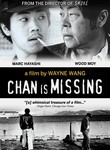
REVIEW: CHAN IS MISSING

Buy | Rent | Book

Preface: This was originally written for the 2001 catalog for the New York Asian American Int'l Film Festival sponsored by Asian Cinevision. It was also reprinted for my AsianAvenue.com column. I have made minor edits to it for republishing here (the bulk of this essay is just as I originally wrote it in 2001). Given the mission of the site, expect that this will not be the last word on Chan ever written.


THE REVIEW (in full after jump).


Early into Wayne Wang’s CHAN IS MISSING, gumshoe detective Jo (Wood Moy) and his sidekick Steve (Marc Hayashi) wander into a Manilatown senior center in search of their wayward colleague, Chan Hung. The movie takes a brief pause here as Wang shoots old manongs dancing to the Mexican bolero, “Sabor a Mi.” One shot lingers on an elderly man staring at the camera, collapsing the third wall with his steady gaze. The entire scenes only consumes a minute or so and then Jo and Steve are back on Chan’s trail, but the beauty of the moment lingers on.

I never had a chance to see CHAN IS MISSING when it hit the theatres – in 1982 I would have been all of ten, living in a white, San Diego suburb, without a glimmer of an Asian American consciousness. Instead, I was introduced to the movie a dozen years later, the way most of my younger peers become familiar with it – through a film class where CHAN IS MISSING sits on top of a tiny canon of “important” Asian American works. From the very onset, we’re taught that the movie is significant because, as Jessica Hagedorn puts it, “it was a first”. The first Asian American feature narrative to gain mainstream accolades, the first to get wider distribution, the first to launch Wayne Wang’s own storied career.

But CHAN IS MISSING always meant more to me than just for its pioneering status. As a teacher, film festival junkie and general consumer of culture, I’ve sat through more Asian American shorts and features than I care to remember and practically all of them are forced to measure themselves besides Wang’s inaugural achievement. Most fail.

It’s not that there haven’t been other insightful, innovative or entertaining Asian American film works made over the last two decades, but few have mastered the secrets of subtlety that Wang brings to CHAN IS MISSING. Part of the problem lies in the nature of the subject – any film that attempts to answer the difficult questions of “who are we?” and “what does it mean to be an Asian American?” walks a dangerous path into didacticism.

However well-intentioned, many of the attempts that followed CHAN IS MISSING these past 20 years have either resulted in anemic, feel-good tales that celebrate multiculturalism without tackling the complexities of race and ethnicity seriously, or they reproduce the same narrow, troubled politics of cultural nationalism that have proven untenable as the community grows more diverse and disparate. What both sides lack is a politics and aesthetics of nuance.

This is precisely where CHAN IS MISSING has triumphed all these years. The film is ostensibly set up as a mystery, but the clues to solving it aren’t revealed in the main story arc but in the tangents. In one key scene set against the backdrop of the Golden Gate Bridge, Jo and Steve argue, Jo insisting that he understands Chan Hung’s difficulties in trying to assimilate as a Chinese immigrant into American society. Steve angrily retorts this is all old hat and yells at Jo, “this identity shit was ten years ago, fuck this identity shit…why are you tripping so hard off of this?” With this brief scene Wang manages to simultaneously summarize and predict 30 years worth of Asian American cultural politics yet absent of any heavy-handed brow-beating or liberal humanist hang-wringing.

It’s these many small touches that give CHAN IS MISSING its soul. It’s Peter Wang, dressed down in his Samurai Night Live t-shirt, singing “Fly Me to the Moon”; it’s the paranoid piano score that stalks Jo around Chinatown; it’s the overeager attorney who only speaks in legalese; it’s the faces of people at a bus stop. The film is filled with these seemingly random asides that become the heart of the movie

Chan is missing yet Chan is everywhere here. He’s a part of all the characters, a presence that infuses all the scenes. In the end, Jo remarks that this mystery goes unresolved as he shows us a picture of a hidden Chan Hung, silhouetted in the shadows. That we never find Chan nudges us to realize that he’s never meant to be found - he is, of course, an extended metaphor – a representation of Asian America as a complex, contradictory figure, impossible to pin down or stereotype. As such, to say “Chan is missing” isn’t a statement but a cipher, an open-ended riddle about our struggle to understand ourselves, our identities. But Wang never forces us to recognize this – it’s our conclusion to arrive at and what ultimately makes CHAN IS MISSING such a powerful film is how it understands and articulates that it’s not the final answer that matters, but our journey to find it.

Labels: chan is missing, review, Wayne Wang

--O.W.

<< Home

About Chasing Chan


Previous Posts

  • A QUICK FYI
  • REVIEW: AU REVOIR TAIPEI
  • REVIEW: DIRTY HANDS: THE ART AND CRIMES OF DAVID CHOE
  • RIP LONI DING
  • THE PITFALLS OF ASIAN AMERICAN INDIE FILM (REMIXED)
  • MY BAY AREA PEOPLES
  • AUSTIN'S AAFF COMING UP SOON!
  • HARIMAYA BRIDGE INTERVIEW
  • SAN DIEGO'S FILM FESTIVAL KICKS OFF THIS WEEK
  • INTERVIEW WITH SFIAAFF'S CHI-HUI YANG

Archives

    03.82 | 03.99 | 07.01 | 02.02 | 09.02 | 02.03 | 03.03 | 04.03 | 05.03 | 10.03 | 03.04 | 07.04 | 03.07 | 07.07 | 08.07 | 01.08 | 03.08 | 04.08 | 05.08 | 07.08 | 02.09 | 03.09 | 05.09 | 07.09 | 08.09 | 09.09 | 10.09 | 11.09 | 03.10 | 05.10 | 03.14 |

Asian American Media Resources

  • Center for Asian American Media (formerly NAATA)
  • Visual Communications
  • Asian Cinevision
  • Asian American Film.com
  • Asian American Film Lab

Film Festivals

  • San Francisco (March)
  • Honolulu (April)
  • Eugene, OR (April)
  • Pittsburgh (May)
  • Los Angeles (May)
  • Chicago (May)
  • New York (July)
  • Dallas (Aug)
  • Washington D.C. (Sep/Oct)
  • San Diego (Oct)
  • Vancouver (Nov)
  • Toronto (Nov)
  • Seattle (Jan)

Filmmakers We Like

  • Eric Byler
  • Gene Cajayon
  • Romeo Candido
  • Curtis Choy
  • Patricio Ginelsa
  • Grace Lee
  • Justin Lin
  • Wes Kim
  • Renee Tajima

Friends

  • Poplicks
  • Angry Asian Man
  • You Offend Me, You Offend My Family
  • Jeff Chang
  • Jeff Yang
  • Reappropriate
  • Asia Pacific Arts
  • Fallout Central
  • Hyphen Magazine

Weblog Commenting by HaloScan.com