
INTERVIEW: WAYNE WANG

Preface: I was asked by Asian Cinvevision to interview Wayne Wang for this year's catalog and naturally, I jumped at the opportunity. This was my first time speaking with him and while most of our conversation revolved around his two new films, Thousand Years of Good Prayers and Princess of Nebraska, I also asked him about the state of Asian American cinema, its transnational implications and his own aspirations to make a gangster flick.
THE INTERVIEW (originally appeared in Asian Cinevision's Cinevue).
Interview with Wayne Wang
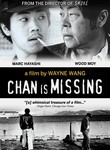
For the last fifteen years, fans of filmmaker Wayne Wang have wondered when he would “return” to Asian American film. The most influential Asian American filmmaker of the 1980s, with movies such CHAN IS MISSING (1982) and DIM SUM (1985), Wang successfully adapted Amy Tan’s JOY LUCK CLUB in 1993. After that, he took a serendipitous route through Hollywood, directing everything from his celebrated, indie film SMOKE (1995), to the edgy digital video flick, THE CENTER OF THE WORLD (2001), to the Jennifer Lopez-lead romantic comedy, MAID IN MANHATTAN (2002).
With this year’s pairing of A THOUSAND YEARS OF GOOD PRAYERS and THE PRINCESS OF NEBRASKA, Wang returns with not one, but two films centered on a new generation of Asian American immigrants. Both are adapted from Oakland author Yiyun Li’s short stories and Wang began his interview with CineVue describing their shared affinity for the “new” Chinese immigrant.
Oliver Wang: How did you first discover Yiyun Li’s writing?
Wayne Wang: [Center for Asian American Media director] Stephen Gong came up to me and said, “There’s this Chinese woman writer who teaches at Mills, and you should look into her short stories.” That same afternoon, Michael Ray, the All-Story magazine editor, also said, “Hey, there’s a really good Chinese writer that’s in the Bay Area, and we’re going to publish some of her stuff.” So I went out and got the book, read through everything, and really liked “Thousand Years.”
OW: What about her stories spoke to you?
WW: I’d been off that Asian American theme for a while. When I was thinking about coming back, I kept thinking, “What has changed?” In both coasts, the biggest change has been the new immigrants from China. And you also begin to see literature from writers in China, like Ha Jin and Yiyun Li and they’re many others. So that’s one.
Two, I really like Yiyun’s writing because everything is in the periphery. Nothing is directly hitting you in the face. Yiyun’s stuff is about human nature, how they cope with it, the residual effect. They’re not sentimental...which is what my kind of aesthetic is, too. I was particularly interested in “Thousand Years” because it also dealt with a whole immigration population, a whole other language. And I was also very intrigued with the father, who was involved and hurt by the Cultural Revolution, and the daughter who was on the fringe of it but also affected.
OW: What struck me about both films is that these are stories about Asians living in America, but their struggles and challenges are not around “Asian American identity”, or where do they “fit in” in the social fabric.
WW: It’s not that the Chinese American material doesn’t exist. I think part of it for me is that I’m an immigrant myself, even though I’m very American. But still there’s something about my own roots growing up in Hong Kong, being Chinese—“What is my relationship to China?”—that really intrigues me about that particular area. The world has flattened out, and it’s very global now.
OW: And that changes their relationship to this idea of American and how they’re meant to negotiate it.
WW: Absolutely. That also has to do more with that newer generation like PRINCESS OF NEBRASKA because the way they grew up, with the internet and the computer and being able to travel more, they’re really into that mind set.
OW: You reflect on technology’s role in PRINCESS OF NEBRASKA the use of the cell phone and its camera. How deliberate was that, building that into the movie?
WW: It’s very deliberate, particularly since I met Ling, who plays Sasha. She has three phones; they’re all decorated differently. And one of the phones got shut off by her mother because she racked up, like, $750 of texting. And she’s constantly doing phone texting, talking to her friends, and also shooting little things—like her own hand. When we saw that it was working well as we started shooting that stuff, we just kept building into it more.
OW: Whose idea was it to bring in Yiyun Li to help with the adaptation for THOUSAND YEARS?
WW: I felt that it was a very specific voice. And I felt that she was really smart and really interested in writing a screenplay. So I just gave her final draft. And I didn’t say very much to her, and I said the things that I liked about the story, and she just wrote the draft. And then we worked on it together. I like working with novelists and making them into screenplays.
OW: PRINCESS, on other hand, was adapted by Michael Ray from Li’s story and he seemed to have a free hand to roam with it.
WW: I told Yiyun, with PRINCESS, “I’m going to get Michael to work on it, and we’re going to improvise a lot.” So a lot of it was on the spot. We made things up...like play jazz music, which I really enjoy. She personally ended up liking PRINCESS better than THOUSAND YEARS. That’s very interesting. She felt that I brought more into PRINCESS than was in the short story, whereas THOUSAND YEARS was pretty much a very faithful rendition. But when she saw PRINCESS, I could see that she was really surprised by it all the time.
OW: I should backpedal—you began with the intention of making THOUSAND YEARS but ended up making two different films. How did that happen?
WW: First of all, PRAYERS is so classic. I wanted to do something that breaks away from that, something that’s freer, more like a jazz riff in my mind. And I felt like I was dealing with two generations, and there’s a new generation that I was seeing and meeting...that was so different. I went to CAAM and said, “Hey, what if just do something really fast, really down and dirty, no permissions, no professional actors, we just find interesting people, find the girl, and just go and do something?” But the main thing was that I really felt like following the three generations, and doing the two films about two different women. One is still caught up in the Old China, so to speak, even though she’s been in America for ten years. And this one that has no baggage, no burdens, no history, no morality, so to speak, that I find really interesting also.
OW: With both of these stories, and this goes to your career as a whole, you often times seem to center really interesting, complex women at the center of your narratives. I’m wondering where that comes from and what’s your interest in doing that.
WW: I don’t know. [Laughs] I think I fell into it in the beginning only because I started doing DIM SUM, because Laureen Chew was a good friend of mine was very intrigued by the relationship with her mother. I fell into it. Then JOY LUCK CLUB came along, and it’s just a wonderful book. And then after that, I was basically stereotyped...as much as I ran away from it, I some how kept being drawn back into it. So women is still very much part of my subject matter. People have criticized me for being anti-Asian men. I said I’d love to do a male book….
OW: I find that accusation ridiculous if you consider the body of work. CHAN IS MISSING and EAT A BOWL OF TEA are very much male-centered films. But go back a moment—are you suggesting that you’ve done so many women-centered films because you have an easier time getting green-lit to do them?
WW: Probably. Because of the success of JOY LUCK CLUB, for me to say, “Well, I’m doing something about a Chinese woman,” tends to be a little easier for them to understand what it is. If I said I was going to do a gangster film with guys, they would say, “Why don’t we get John Woo?” So no matter what I do, I’m boxed in a little bit. But the other part is that...you know, I like women. I feel very close to them. I just find them, in a way, more interesting. My wife says I may have been a woman in my last lifetime. So who knows?
OW: What was it like coming to a film of this size/scope after your string of more commercially-targeted films—MAID IN MANHATTAN, BECAUSE OF WINN-DIXIE, LAST HOLIDAY.
WW: I learned a lot with all those films. Let me give you one example, something like WINN DIXIE. When we previewed the film, we cut and re-cut...the last thing the studio wants is what they call a pacing pass. They cut out anything that has a moment where the character takes a breath or is thinking. Just to keep the movie moving along. And I really missed those things. I felt like with THOUSAND YEARS I wanted to have a very different language, especially in terms of timing. I wanted characters to breathe.
OW: In other words, a very different kind of film from what a commercial studio would expect.
WW: Today, to make a movie about an old man is almost impossible, especially if you don’t have a star. Let alone that it’s Chinese, and that it’s subtitled. So you’ve got to understand these problems. Originally there was also half the money coming from China. China dropped out in the last minute because of the couple of lines. For example, the line that he says, “Communism is not bad, but it fell into the wrong hands.” So half of our financing went away. This movie is really difficult to get made. It will probably never get made again, especially in the context of America. But I consciously made those choices to say, “Work really down and dirty, work cheaply, work with a lot of integrity, and try to make these movies.” And that’s what they are.
OW: With you, with other American directors like Steven Soderberg, or even a younger filmmaker like Justin Lin, there seems to be a back-and-forth pattern with your more commercial films being used as springboards to make more independent films. Is that deliberate?
WW: I realize through my career that if I just did the independent films, I probably wouldn’t be able to support my career and keep doing the independent films. I needed the bigger films. I needed—as much as I hated doing it in a way, but MAID IN MANHATTAN was a huge hit and gave me a lot of leeway to do a lot of other things. I don’t know. It’s tricky, that process.
OW: As a filmmaker, does this come as burden that you’re forced to bear that “Why aren’t you making more Asian American films?”
WW: Well, it is a burden. In the beginning, I felt like I couldn’t get off of that track because of that burden. But after JOY LUCK CLUB, I just felt that I had to get away because everything I was getting was related to Chinese or China or whatever. I had to get off. I exhausted, so to speak, my stories and my interest. Now it’s still kind of a burden, but I don’t mind it. I feel like I know this material. I know it really well, both about, let’s say, Chinese American versus new immigrants in America. I think that it’s so much more complex now, too. For example, Ha Jin’s new book, A Free Life, I was very fascinated by. So I’m trying to do an adaptation of that. The focus I tend to be on right now is immigrants, and particularly immigrants from China. I just feel like that’s where the world is at these days, too.
OW: Not just that but there’s also a spate of reverse migration, you could say, where Asian American filmmakers are going to Asia to make feature films. You did this back in the ‘80s with LIFE IS CHEAP...BUT TOILET PAPER IS EXPENSIVE—you see this as a possible new trend?
WW: I think so. I’m very much in support of that, too. I’m very interested in maybe putting a package together, let’s say six films, where I may do one and produce the other ones with different varying budgets from different parts of Asia—whether it’s Filipino, Malay, Singapore, Thai, Hong Kong, obviously—and make really interesting movies that will also hopefully be more accessible to a world market, not just a limited market. I’m really intrigued by that and challenged by that.
OW: You mentioned earlier, an interest in doing a gangster film. Have you considered doing a straight up genre film?
WW: Yes. I’ve always been talking about that and still trying to find a way to do it. I keep telling my agent, “Just get me a genre film of some kind.” I could do it. But it’s hard. Right now, I was talking to [PRINCESS’ cinematographer] Rich Wong, who was very much working with me creatively as a co-director credit, who [directed] COLMA: THE MUSICAL. I said, “We should do a gangster musical that’s really violent with Chinese guys.” I’m serious.
Labels: film festivals, interview, Wayne Wang



<< Home