Friday, September 18, 2009

STARTING SIX GUEST LISTS

Why should I have all the fun? I invited some valued friends and colleagues to submit their own suggestions for the starting six Asian American films you need to see.


Renee Tajima-Peña is one of the finest documentarians out there, having been responsible for everything from Who Killed Vincent Chin? (along with Christine Choi) and My America. She's also training the next generation as a Community Studies professor at UCSC. She wants you to know, "oh, I hate canons but if forced," she suggests these "oldies but goodies."

Renee Tajima-Peña's Starting Six (Plus 2)

1) Dragon Painter (WIlliam Worthington, 1919)
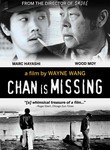
2) Chan is Missing (Wayne Wang, 1982)
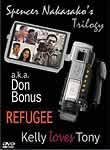
3) AKA Don Bonus (Spencer Nakasako, 1995)
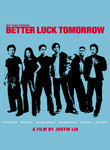
4) Better Luck Tomorrow (Justin Lin, 2002)
5) Fall of the I-Hotel (Curtis Choy, 1985)
6) Dupont Guy: The Schiz of Grant Avenue (Curtis Choy, 1976)
+1) History and Memory (Rea Tajiri, 1991)
+2) Whose Going To Pay For These Donuts, Anyway? (Janice Tanaka, 1992)


Brian Hu is the managing editor for the finest Asian/Asian American arts and culture publication I know, Asia Pacific Arts. The web-magazine has extensive coverage on Asian American cinema, including yearly "best of" lists of their favorite flick picks.

Here's what he had to preface with: "A starting six should make no excuses. There should be no qualifications like "good for an Asian American film" or "we should support it because it's by an Asian American." A starting six shouldn't engage the viewer with theory. Rather, it should directly engage the viewer as any film should: via the senses, as spectacle, as sheer bodily pleasure. They should first and foremost move us into wanting to explore more."

Brian Hu's Starting Six

1. History and Memory (Rea Tajiri, 1991)
An Asian American film can look like this. History and Memory is a documentary about the images a Japanese American mother can no longer recall, and the images her daughter has created so a generation will not forget. Rea Tajiri's visuals, culled from Hollywood clips, home video footage, and self-performance, are fragmented and unruly, just as our memories are. History and Memory is one of the highest artistic achievements by an Asian American in any medium. and is available on DVD for the educational market from Women Make Movies. See also: Chan is Missing (1982)

2. The Wedding Banquet (Ang Lee, 1993)
An Asian American film can taste like this. You can practically tell this story of generational conflict through Ang Lee's depiction of food: what people eat for what occasions, where people eat, who eats with whom, who cooks for whom, etc. Of course, there's more to The Wedding Banquet than the cooking, but for Asian Americans, what evokes the affection and anxieties of home better than food? Taste also: Catfish in Black Bean Sauce (1999), Eat a Bowl of Tea (1989)

3. Mississippi Masala (Mira Nair, 1991)
An Asian American film can touch like this. One of my favorite sex scenes in Asian American cinema is between an Indian American woman from Uganda and an African American man from Mississippi. In the film, much is made about the interracial romance ("Is she Mexican?" some ask), but in the scene in question, they are just two shimmering shades of naked brown, locked in passion. Having Denzel Washington helps too. Experience also: Charlotte Sometimes (2002)

4. aka Don Bonus (Spencer Nakasako, 1995) and Refugee (Spencer Nakasako, 2004)
An Asian American film can smell like this. Sure, I'm using smell a little conceptually here, as scent is perhaps the hardest sense for cinema to evoke. But there's certainly an olfactory tactility in Spencer Nakasako's work: a cinema that is genuinely moved by the stenches of everyday life -- the grime of the Tenderloin projects, the sweaty bodies of Cambodian Americans unaccustomed to the heat of their fathers' homeland. Asian American cinema should not -- in fact must not -- simply harvest the gentle potpourri of upper-middle class suburbia. Smell also: the sweat and dank of the tropics and the dumpsters of Santa Ana in Journey from the Fall (2006)

5. Colma: the Musical (Richard Wong, 2006)
An Asian American film can sound like this. In fact, it can sing! For his catchy lyrics and catchier tunes, H.P. Mendoza should be a national treasure. Colma: the Musical isn't the resurrection of a classical American genre, but is its much-needed low-fi awakening. Richard Wong's direction complements Mendoza's explosive charm well, and no scene better breaks down their collaboration than the split-screen, long-take nerd-out, Christmas-light fantasy "Crash the Party." Hear also: Fruit Fly (2009)

6. The Sixth Sense (M. Night Shyamalan, 1999)
I prefer Shyamalan's Unbreakable (2000), but I couldn't resist the appropriateness of the title of his Best Picture-nominated breakout hit. Love him or hate him, Shyamalan is, along with Michael Bay, Hollywood's only pure stylist -- though unlike Bay, Shyamalan consistently applies his mad genius long takes, odd framings, and sound design for the sake of character development and emotional arousal. But the "sixth sense" I'm speaking of here is the ability to appreciate that even films not explicitly about Asian Americans can still be representative "Asian American cinema." It's the ability to see race when nobody else does, but without insisting on it. It's the ability to hear impassioned, though sometimes inadvertent, alternative voices embedded beneath the dominant clatter. In other words, it's the ability to see the living that the mainstream doesn't even know is alive.

Also: anything by Gregg Araki (The Living End), Jon Moritsugu (Terminal USA), Jessica Yu (In the Realms of the Unreal), Ang Lee (The Ice Storm), Wayne Wang (Last Holiday), James Wong (Final Destination), Jay Chandrasekhar (Beerfest), Tarsem Singh (The Fall), Karyn Kusama (Girlfight), and Justin Lin (Fast & Furious)
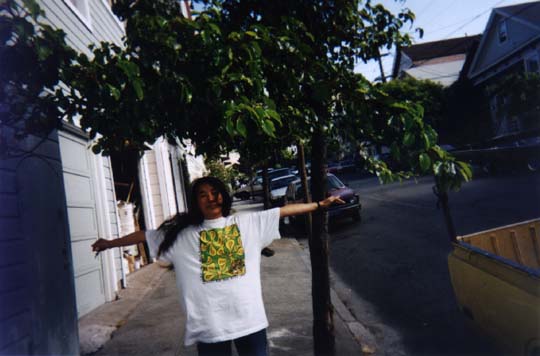


I got to know Valerie Soe back in the '90s, probably through NAATA and definitely strengthened by having her come, several times, as a guest lecturer to my AA film class at UC Berkeley to talk about experimental AA works. That's not just her field of expertise as a professor at SF State; that's also her mark as a filmmaker too. (Small world coincidences: I found out, years later, that my wife was a research assistant for Valerie's Picturing Oriental Girls short from 1992).

Valerie Soe's Starting Six

First Person Plural, Deann Borshay, 2000
An emotional look at a Korean adoptee’s search for her family and her identity, with some surprising conclusions. One of many excellent Asian American personal documentaries (see also New Year Baby; AKA Don Bonus; Refugee)

The Debut, Gene Cajayon, 2000
A charming little family drama set in the heart of Pilipino-America, this flick celebrates the Pin@y cultural movement of the 1990s, with break-dance battles, kulintang, turntablism, girl groups, tinikling, cha-chas, lumpia, car culture, and basketball--all in one night at a debutante party.

Imelda, Ramona Diaz, 2004
An amazing documentary portrait of Imelda Marcos, featuring a lengthy interview with the main subject herself as she laments the ugliness of the weapon of her would-be assassin, describes her elaborately embroidered wardrobe which blinded several overworked seamstresses, and otherwise fails to understand why the world and the Pilipino people have turned against her.

The Motel, Michael Kang, 2005
An unsentimental, completely unconventional coming-of-age story about a misanthropic Chinese American kid and his dysfunctional family running a fleabag motel on an interstate on the East Coast. Bunny hand puppets will never be the same—

Never Forever, Gina Kim, 2006
Vera Farmiga, David Lee McInnes, and Ha Jung-Woo make up a love triangle in this intriguing look at the conflict between passion and duty. Notable for featuring not one but two extremely hot and desirable Korean American men.

Colma: The Musical, Richard Wong & HP Mendoza, 2006
Exhilirating cinematography, engaging performances, great tunes, and poignant coming-of-age stories invigorate this neat little flick set in the drab Bay Area suburb of Colma, where fog and cemeteries define the landscape.


Phil Yu is THE Angry Asian Man; act like you knew. There's no voice on the internet more trusted than bringing you the latest news of note to the API community and he's been a major force in helping get the word on an all things AA cinema related.

Phil Yu's Starting Six

Flower Drum Song, Henry Koster, 1961
I agonized over what to include in this last spot. Yet again, I had to go with a movie that is arguably not even an Asian American film, but a relatively conventional, cookie-cutter Hollywood studio production, chock full of cheesy Chinese moments to roll your eyes at. It will also blow your mind. If we're talking about films as a jumping off point, this Rodgers and Hammerstein musical is a particularly intriguing artifact to examine (and, I'll admit, enjoy) nearly fifty years after its release.

Chan Is Missing, Wayne Wang, 1982
By a lot of measures, this is the film that started it all. Wayne Wang's landmark Chinatown narrative was an announcement: modern Asian American independent cinema was here, and would not be ignored. Nearly three decades later, it's rather amazing how this film still holds up.

Who Killed Vincent Chin, Renee Tajima and Christine Choy, 1989
This film changed my life. Like a lot of young, college-aged Asian Americans, watching this documentary was a profound moment in the politicization of my identity. It's not readily available, but to me, it's required viewing. Seek it out and watch it if and when the opportunity arises.

Better Luck Tomorrow, Justin Lin, 2002
This has to be on this list, right? Justin Lin's solo debut feature roared out of Sundance like a deafening wake-up call, giving us something unlike anything we'd ever seen, and ushering in a new era for Asian American independent cinema. Few films have replicated the impact of this film, but it provided us with a unique model as the Little Asian American Indie That Could.

Harold and Kumar Go To White Castle, Danny Leiner, 2004
I know, I'm cheating. This film is neither written nor directed by Asian Americans. It also probably doesn't need to be on this list, since it's fairly recent and was widely distributed. But it does feature two of our guys in the title roles. And as unremarkably crass and low-brow as this stoner comedy is, I'm going to put it out there that this unlikely movie is actually one of the most significant, revolutionary films for Asian American representation in the last decade. Come on, Asian American film scholars. I know you won't admit to it, but in your heart, you're with me.

Saving Face, Alice Wu, 2005
Marvelously written with some wonderful performances -- particularly from Joan Chen as Michelle Krusiec's illegitimately knocked up mom -- Alice Wu's charming, highly entertaining romantic comedy is simply a near-perfect example of a post-BLT independent Asian American film done right.

Honorable mentions: aka Don Bonus, Refugee, The Motel, Enter the Dragon


Labels: starting six
--O.W.

<< Home

Tuesday, August 25, 2009

CHASING CHAN'S STARTING SIX


Coming out of our recent conversation on how best to support Asian American cinema, there are a few things ordinary people can do, especially those living outside cities like SF, LA or NY.

The first is to push your local public library or university library to purchase Asian American movies for their collection. This was extremely hard to do 10 years ago, namely because there was little distribution available for those movies. Nowadays though, many films - both older and contemporary - are available on DVD or VHS. People should push their local institutions to take advantage of that and stock up on Asian American films.

The other, even easier thing you can do is throw a local screening party for you and your friends. Despite the growth in Asian American films gaining distribution, it's still a challenge to be able to see many movies in your local cineplex or even art house theaters. However, many films can be rented through mainstream sources (alas, not all) and that opens up opportunities - never available in a previous era - to experience the diversity of the Asian American filmmaking tradition.

As a resource, here's a list of six films that I'd recommend to any newcomer to Asian American cinema. Some caveats: 1) This is not meant to be a definitive list, especially given that there's been many films I haven't seen, especially in the years since I left the Bay Area and *sniff* my time with CAAM/NAATA behind. Just to give you an idea of how deep the catalog runs, check this out - and that is missing dozens of films. However, these six are films that I think belong to whatever you might call an "Asian American film canon" and thus, are useful places to begin (just not end). 2) It's weighted more to feature films than documentaries namely because, frankly, I feel like more work is needed to bring up feature filmmaking to where documentaries have been over the last 20 years. 3) The list has a heavy bent towards East Asian American, male filmmakers. That is partially a product of long-standing structural privileges that have created more opportunities for Chinese and Japanese American - and male - filmmakers compared to others (and let's just be frank here - it's not as if those CA and JA filmmakers are what you'd call "privileged" in general). From what I've been seeing in the last 10 years though, things are going to change very, very dramatically, especially with far more women directors out there and a slew of Korean, Filipino, South Asian and Southeast Asian filmmakers on the rise as well. All these qualifiers aside, here's my six picks:

1. (List is in chronological order)

Chan Is Missing, dir. Wayne Wang, 1982.

Technically, not the first Asian American feature film but the first one to gain any national recognition, plus distribution, and in my opinion, flat-out the best Asian American feature film ever made. Which is great, in terms of how brilliant this film is, but also kind of sad that no AA film has ever managed to better it in the 27 years since its release. Hence the raison d'etre of this site. In any case, the film is a profound allegory about the search for Asian American identity but manages not to be didactic about it. Fantastic characters throughout and excellent acting by Wood Moy and Marc Hayashi.


2.

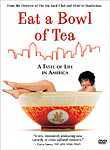
Eat a Bowl of Tea, dir. Wayne Wang, 1989.

I didn't want to have more than one-film-per-director, but it's hard to not include this film for one important reason: for people who complain there are no films about intra-Asian American romance, well, here you go. Of course, this adaptation of Louis Chu's novel is also very much a family melodrama/generation gap film, with a risque - and hilarious - twist on how the pressures of family and community can weigh down one's sex life. As such, it actually fills in a "one of the best" in a few key categories: family melodrama (believe me, you'd much rather watch this than, say, Joy Luck Club), comedy, generation gap, etc. There are, of course, other films that have touched on this - I'm thinking especially of Alice Wu's Saving Face and before that, Mina Shum's Double Happiness - but in terms of quality of execution, Tea still takes this one. The film can seem a little cartoonish at times and the generation gap angle gets overplayed but it is entertaining and has surprisingly more historical depth to it than you might assume.

Also: nice casting (at least on the eyes) with Russell Wong and Cora Miao as the ill-fated couple while Victor Wong does the grumpy old dude bit quite well as Wong's father.


3.
Terminal U.S.A., dir. Jon Moritsugu, 1993.

By the good graces of the Almighty, this film is finally available on DVD. I have to admit - I'm including this on this list purely for the most selfish reason; it's just one of my favorite Asian American films of all time, namely because it's a brilliant, viciously executed anti-Asian American film. Note, it's not that the film is anti-Asian American. It's anti-Asian American film, which is to say that Moritsugu serves up a biting satire of Asian American family melodramas with enough improper sex, drugs and violence to scar more timid minds. I'd actually recommend you watch this film last, partially because it'd make an awfully good midnight movie, partially because you can get a sense of what Moritsugu is responding to in terms of the cliche themes of so many AA films, past, present and no doubt, future.

4.

AKA Don Bonus, dir. Spencer Nakasako, 1995.

Asian American documentaries have been the heart of Asian American filmmaking but because of the economics of docs, they are also the hardest films to find outside of institutional settings (libraries, film festivals, etc.) Luckily, Spencer Nakasako's trio of documentaries focused on Bay Area South-East Asian youth IS more widely avail. AKA Don Bonus was the first of these, a stark diary film about a year in the life of Sokly Ny, aka Don Bonus, a Cambodian teenager from the Tenderloin who is struggling with living in the S.F. housing projects, trying to finish high school, and dealing with his unstable family life. A powerful and remarkable film.

4.

Better Luck Tomorrow, dir. Justin Lin, 2002.

This is rather obvious choice, I suppose, given that it's the most high-profile AA film of its generation. Besides great admiration for the director and actors, the main reason I'm including BLT is that it's a useful starting point for a Gen X/Y perspective on AA feature filmmaking. I mean, all respect due to Chan Is Missing but it's not an easy a film to connect with anyone under the age of 30. While I don't think BLT is a perfect film, it does have a way of getting conversations started and that's as important as anything, especially for the purposes of this list.

It's also one of the first Asian American features that really doesn't deal with any of the obvious themes that the previous generations have hammered home - no generation gap/family melodramatics, no "where do I fit in?" assimilationist existentialism, and while race and racism enter the picture, it's the AZN characters who do the pistol-whipping. In other words, it's like a film you'd normally see with non-Asian actors except that it's an all-Asian cast. That alone is rather refreshing and groundbreaking in its own way.

5 & 6.

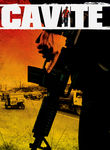
Cavite, dir. Neill Dela Llana & Ian Gamazon, 2005


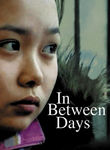
In Between Days, dir. So Yong Kim, 2006

I'm pairing these two together because they both represent some of the most interesting - and arguably transformative - films of the last decade. By this I mean, they, as much as anything else I can think of, signify the shifting narratives - and geographies - of Asian American filmmaking.

Cavite takes place almost exclusively in the Philippines and there's nothing particularly "Asian American," let alone "Filipino American" about the story; it just happens to be an intensely arresting thriller about a prodigal Filipino American son who returns to the P.I. for his father's funeral and is promptly roped into what may or may not be a diabolical plot by terrorists. No doubt, the fact that the film takes place outside the U.S. raises the basic question of, "well, is it Asian American still?" and I don't think it's an inappropriate question. I do think, however, this is where things are headed and AA cinema is going to adapt to it one way or another.

Likewise, with In Between Days, here's one of the few films dealing with an Asian immigrant yet the film's quiet, subtle touches don't beat you over the head with the "assimilation" stick, even if Aimie's "fitting in" is hinted at during parts of the film. More importantly than that though, just as Cavite situates its character within a more global setting, In Between Days, like Wayne Wang's similar (but less successful) Princess of Nebraska, takes a realistic approach to a generation of immigrants who exist more fluidly with a transnational identity. I think we're going to see more portrayals like this and it will be a welcome - and meaningful - break from tradition.

Wish list + Honorable Mentions:


Who Killed Vincent Chin?, dir. Christine Choy and Renee Tajima, 1989.

This would have made the list, easily, except it's not readily available. This Academy Award nominated documentary explores the complex web of race, class and masculinity that lay behind the infamous 1982 murder of Detroit's Vincent Chin at the hands of two White autoworkers. The conventional wisdom has been that Chin was the victim of racial confusion - the autoworkers thought he was Japanese at a time where anti-Japan sentiment was at its height in Detroit. However, as the documentary tries to disentangle, the reasons for Chin's death are more complicated. The footage of Ron Ebens, one of Chin's two murderers, is both sad and chilling. The film is available for rental but only at institutional prices ($95). Check your local college library first.


Yuri Kochiyama: Portrait of Courage, dir. Rea Tajiri, 1994.

Yuri Kochiyama might very well be one of the most important Asian Americans many Americans have never heard of - a Civil Rights pioneer for four decades and also a powerful force in uniting the oft-contentious chasm between Asian Americans and African Americans. This documentary by Rea Tajiri gives Yuri's exceptional life and contributions some much needed focus and exposure. Again, it's only available for institutional rental/purchase...hopefully it will be able to reach a broader audience soon. Meanwhile, check your local libraries.


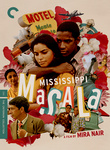
Mississippi Masala, dir. Mira Nair, 1992.

I generally am not a big fan of films about interracial relationships only because they tend to be incredibly ham-fisted and cliche-ridden but Mississippi Masala, despite some predictable, "you're going out with...HIM?!?!?!" scenes, still holds up as being more compelling than most, not to mention a rather ahead-of-its-time film focusing on the South Asian diaspora - in the U.S. South, no less. Plus, you get a hot, young Denzel. What more you want?


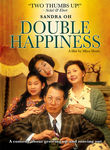
Double Happiness, dir. Mina Shum, 1995.

Yes, this is a pretty cookie cut family melodrama/generation gap film in many ways, and yes, it has two eye-rolling characters - the mega-conservative dad and the goofy white boyfriend - but straight up, Sandra Oh makes this film watchable every scene she's in.

Charlotte Sometimes, dir. Eric Byler, 2003.

A well-executed, well-acted indie DV film about four intersecting lovers in Silverlake. Some might find it a bit too slow - and possibly contrived - but I liked the pacing and especially liked watching Jacqueline Kim and Michael Idemoto awkwardly dance around each other.

Fall of the I-Hotel, dir. Curtis Choy, 2005.

Along with Who Killed Vincent Chin?, Choy's labor of love is considered one of the definitive Asian American documentaries and even though it focuses on events from the 1970s, its power and resonance has yet to fade. I still am deeply moved every time I watch this film which says something about the power of the story behind it - the eviction of elderly Filipino manongs from a residence hotel in the old S.F. Little Manila - but much credit also goes to Choy who does a masterful job of pulling together footage from his own filming and found material. Plus, a beautiful passage featuring the late Al Robles. It's not available for rent but you can buy it and in my opinion, it's worth every dollar.

Coming Up:

I plan to solicit other Starting Sixes from a few colleagues and friends BUT I also want YOUR input. What is your Starting Six? You don't need to annotate (unless you want to). Send your suggestions to: oliverwang AT gmail.com

Thanks!


(Also check out AsianAmericanFilm.com's three different Top 5 lists from folks like Peter Feng and Greg Pak. They mix in shorts (whereas I'm asking for all feature-length films) but their tastes also run more unconventional than the list I put together so it's good for contrast. But like the razor wars, they got five and we got six! ;)


Labels: starting six

--O.W.

<< Home

About Chasing Chan


Previous Posts

  • A QUICK FYI
  • REVIEW: AU REVOIR TAIPEI
  • REVIEW: DIRTY HANDS: THE ART AND CRIMES OF DAVID CHOE
  • RIP LONI DING
  • THE PITFALLS OF ASIAN AMERICAN INDIE FILM (REMIXED)
  • MY BAY AREA PEOPLES
  • AUSTIN'S AAFF COMING UP SOON!
  • HARIMAYA BRIDGE INTERVIEW
  • SAN DIEGO'S FILM FESTIVAL KICKS OFF THIS WEEK
  • INTERVIEW WITH SFIAAFF'S CHI-HUI YANG

Archives

    03.82 | 03.99 | 07.01 | 02.02 | 09.02 | 02.03 | 03.03 | 04.03 | 05.03 | 10.03 | 03.04 | 07.04 | 03.07 | 07.07 | 08.07 | 01.08 | 03.08 | 04.08 | 05.08 | 07.08 | 02.09 | 03.09 | 05.09 | 07.09 | 08.09 | 09.09 | 10.09 | 11.09 | 03.10 | 05.10 | 03.14 |

Asian American Media Resources

  • Center for Asian American Media (formerly NAATA)
  • Visual Communications
  • Asian Cinevision
  • Asian American Film.com
  • Asian American Film Lab

Film Festivals

  • San Francisco (March)
  • Honolulu (April)
  • Eugene, OR (April)
  • Pittsburgh (May)
  • Los Angeles (May)
  • Chicago (May)
  • New York (July)
  • Dallas (Aug)
  • Washington D.C. (Sep/Oct)
  • San Diego (Oct)
  • Vancouver (Nov)
  • Toronto (Nov)
  • Seattle (Jan)

Filmmakers We Like

  • Eric Byler
  • Gene Cajayon
  • Romeo Candido
  • Curtis Choy
  • Patricio Ginelsa
  • Grace Lee
  • Justin Lin
  • Wes Kim
  • Renee Tajima

Friends

  • Poplicks
  • Angry Asian Man
  • You Offend Me, You Offend My Family
  • Jeff Chang
  • Jeff Yang
  • Reappropriate
  • Asia Pacific Arts
  • Fallout Central
  • Hyphen Magazine

Weblog Commenting by HaloScan.com